01
Astronomy: what do we observe?
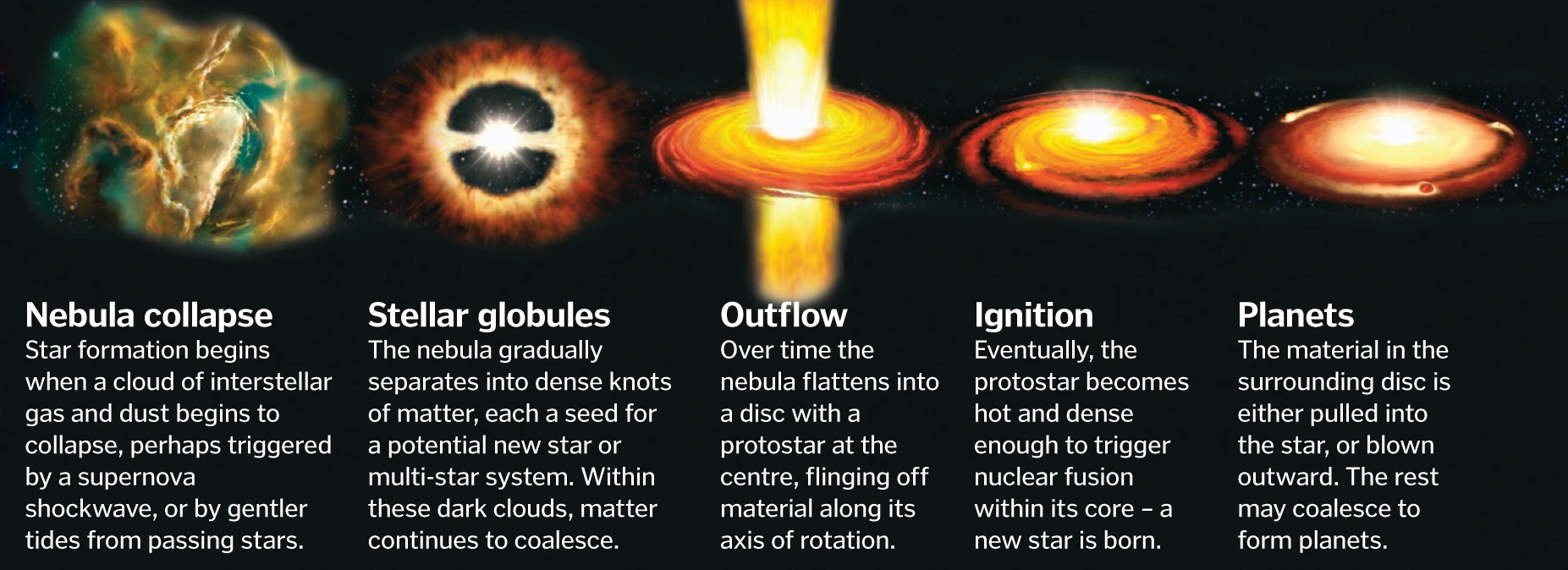
Positions, light, motion, and spectra help us describe objects in space. Leo’s sickle and the galaxies beyond it make a useful starting point.
 LEONISUNIVERSENewsletter
THE LEONIS OBSERVATORY
Astronomy, astrophysics, and planetary science—with Leo as our window into the universe.
NEW / LEONIS COMICS EDUCATION
Discover the real Leo. Turn a star model sideways. Take the challenge. Bring a 14-page illustrated field guide to your classroom.
A CONSTELLATION IS A VIEW
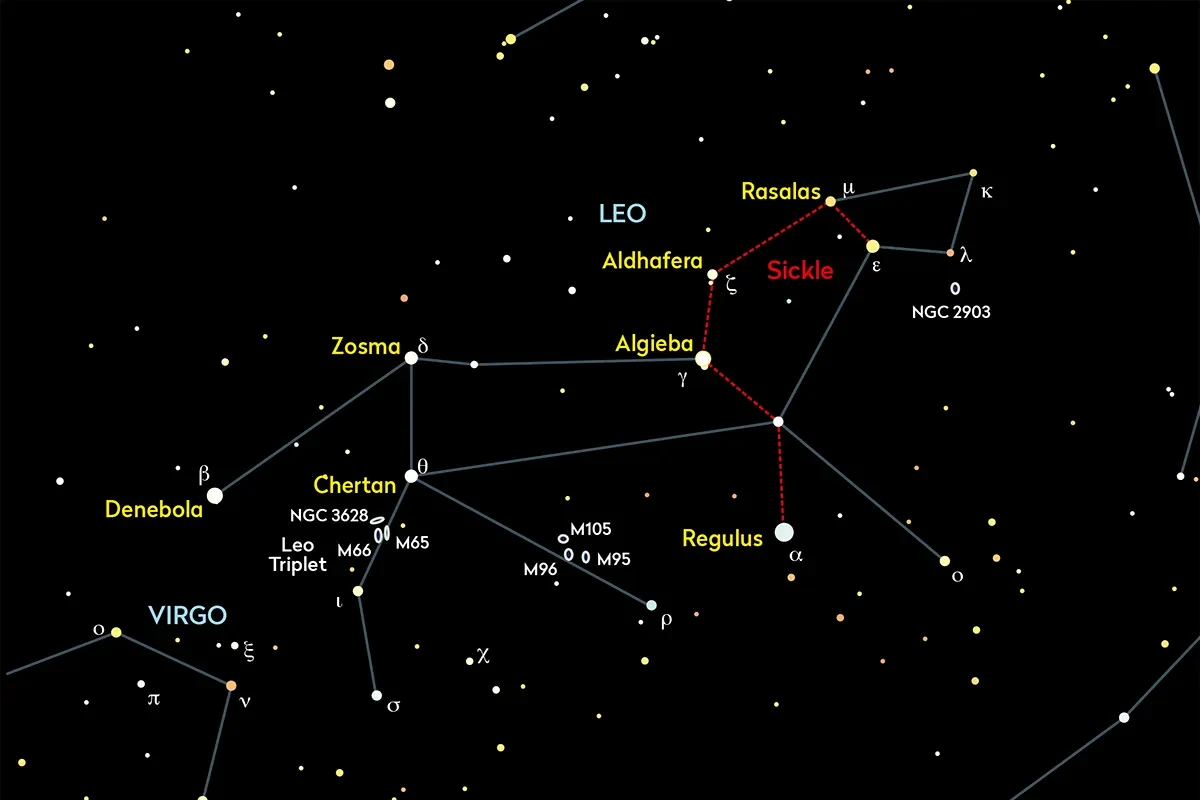
Leo is a region of our sky, not one physical neighborhood. Its familiar star pattern and the much more distant galaxies seen in the same direction sit at very different distances.
NASA: Celestial Wonders in Leo ↗OBSERVED → IMAGINED
Regulus marks the base of Leo’s sickle pattern. In Leonis, its realm connects Soularia, Luminara, and Heliara.
THE SCIENCE TOOLKIT
01
Positions, light, motion, and spectra help us describe objects in space. Leo’s sickle and the galaxies beyond it make a useful starting point.
02
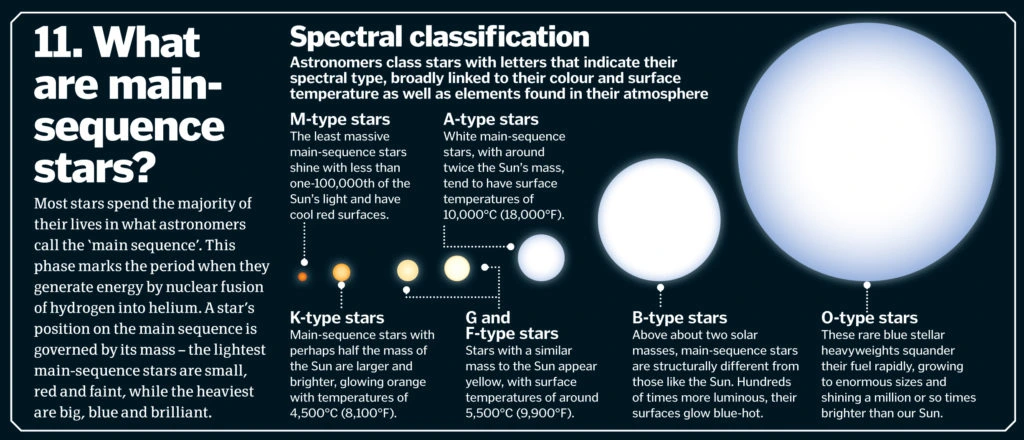
Gravity shapes stars and galaxies. Fusion supplies the energy of main-sequence stars. Light carries clues about temperature and composition.
03
A planet’s atmosphere, orbit, mass, and energy balance all matter. Receiving the right amount of starlight alone does not establish habitability.
MODELED / THE PLANET LAB
Move the controls to compare incoming energy and a simplified equilibrium temperature.
SIMPLIFIED ENERGY BALANCE
Uniform heat redistribution, no greenhouse warming, and no internal heating. This is an equilibrium estimate—not a surface-temperature forecast or a life detector.
Model: relative flux = L / d²; T = 278.3 × [L(1 − A) / d²]¼ K. L is solar luminosities, d is AU, and A is albedo.
For an ocean world like fictional Trine, atmosphere and water circulation would also matter. Multiple moons would add tidal interactions that this simple model does not simulate.
NASA: The Habitable Zone ↗MODELED / LIGHT-YEAR EXPLORER
A light-year measures distance. Try 30,000,000 light-years to explore the approximate scale of the Leo Triplet.
TIME IN THE DEPARTURE FRAME
Constant speed, ignoring acceleration and expansion of space. Massive spacecraft cannot reach light speed. A speed of 1c here describes light, not a spacecraft. Traveler time would require a separate relativity calculation.
Leonis portals are a fictional story mechanism, not an established transport technology.
WATCH & QUESTION
Twelve videos selected by Leonis. Watch, compare claims with the source library, and bring your questions.
Players load only when you choose Play. YouTube may receive device and viewing information. These selections have not been independently fact-checked by Leonis; creator availability and embedding permissions may vary.
LEONIS SELECTION 01 / SHORT
Open original on YouTube ↗LEONIS SELECTION 02 / VIDEO
Open original on YouTube ↗LEONIS SELECTION 03 / SHORT
Open original on YouTube ↗LEONIS SELECTION 04 / VIDEO
Open original on YouTube ↗LEONIS SELECTION 05 / VIDEO
Open original on YouTube ↗LEONIS SELECTION 06 / VIDEO
Open original on YouTube ↗LEONIS SELECTION 07 / SHORT
Open original on YouTube ↗LEONIS SELECTION 08 / VIDEO
Open original on YouTube ↗LEONIS SELECTION 09 / VIDEO
Open original on YouTube ↗LEONIS SELECTION 10 / VIDEO
Open original on YouTube ↗LEONIS SELECTION 11 / SHORT
Open original on YouTube ↗LEONIS SELECTION 12 / SHORT
Open original on YouTube ↗SCIENCE REFERENCES
Explore the original scientific learning resource.
Read the source ↗Explore the original scientific learning resource.
Read the source ↗Explore the original scientific learning resource.
Read the source ↗Explore the original scientific learning resource.
Read the source ↗